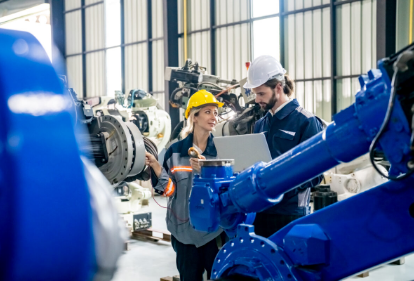
 In today’s fast-evolving industrial landscape, projects are becoming more complex, large-scale, and technology-driven. Industries such as oil and gas, construction, renewable energy, manufacturing, and infrastructure demand higher levels of precision, safety, and efficiency than ever before. To meet these demands, advanced inspection technologies have become a cornerstone of modern industrial projects.
These technologies not only enhance the accuracy of inspections but also help detect hidden defects, reduce risks, and improve overall operational performance. In this blog, we explore the critical role that advanced inspection technologies play in ensuring the success of modern industrial projects.
Advanced inspection technologies refer to modern tools and techniques used to evaluate the condition, performance, and safety of equipment, materials, and systems without causing damage. These technologies go beyond traditional inspection methods by offering deeper insights, faster results, and greater accuracy.
They are widely used across industries to ensure compliance with quality standards, improve safety, and optimize maintenance strategies.
Traditional inspection methods often rely on manual checks, which can be prone to human error. Advanced technologies provide highly accurate and reliable data, enabling better decision-making.
Modern tools can identify microscopic defects, cracks, or irregularities that are not visible to the human eye. Early detection helps prevent failures and costly repairs.
Industrial environments can be hazardous. Advanced inspection methods reduce the need for human intervention in dangerous areas, improving worker safety.
By identifying issues early and reducing downtime, these technologies help lower maintenance costs and prevent expensive project delays.
Advanced inspection tools ensure that projects meet international quality and safety standards, which is essential for regulatory compliance.
Non-Destructive Testing is one of the most widely used inspection methods in industrial projects. It allows inspectors to evaluate materials and structures without causing any damage.
These methods are essential for detecting internal and surface defects in materials.
Drones have revolutionized inspection processes, especially in hard-to-reach or hazardous areas.
Drones provide real-time data and high-resolution images, reducing inspection time and risks.
Thermal imaging uses infrared cameras to detect temperature variations in equipment and systems.
This technology is widely used in electrical and mechanical inspections.
Robots are increasingly used for inspection tasks in confined or dangerous environments.
Robotic systems improve accuracy while minimizing human exposure to risks.
Laser scanning technology creates detailed 3D models of structures and environments.
This technology helps engineers visualize and analyze complex structures with high precision.
A digital twin is a virtual replica of a physical asset or system.
Digital twins enable proactive decision-making and improved asset management.
AI and data analytics are transforming inspection processes by automating data analysis and improving accuracy.
AI-driven inspections reduce human error and enhance efficiency.
Advanced inspection technologies are used to monitor pipelines, offshore platforms, and refineries, ensuring safety and compliance.
Technologies like drones and laser scanning help monitor project progress, detect structural issues, and ensure quality.
Inspection tools are used to monitor solar panels, wind turbines, and energy systems for optimal performance.
Automated inspection systems ensure product quality and reduce defects during production.
Thermal imaging and AI-based inspections help maintain electrical systems and prevent failures.
Advanced technologies can be expensive to implement.
Operating these tools requires trained professionals.
Adapting new technologies into existing workflows can be challenging.
Handling large volumes of inspection data requires efficient systems.
The future of industrial inspection lies in automation, AI, and smart technologies. Key trends include:
These advancements will further improve safety, efficiency, and reliability in industrial projects.
Advanced inspection technologies are transforming the way industrial projects are executed and maintained. By improving accuracy, enhancing safety, and enabling predictive maintenance, these technologies play a vital role in ensuring project success.
As industries continue to evolve, adopting advanced inspection solutions is no longer optional—it is essential for staying competitive, compliant, and efficient in today’s demanding industrial environment.
